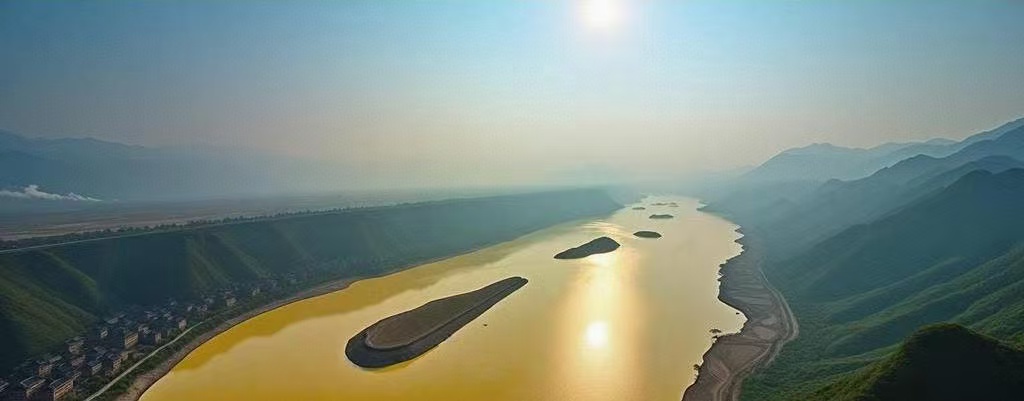
The Yellow River, which has been running for thousands of years, feeds the Chinese nation along with the Yangtze River and nurtures the ancient and great Chinese civilization.
"River" is the Yellow River.
"River" in Qin Han was formerly a special name for the current Yellow River, sometimes to indicate supreme status, also called her "Big River" and "Tay River", other rivers called "Scheon" or "Water".
The Book of Poems is a collection of poems reflecting the social life of fifteen countries from the Western Zhou to mid-Spring and Autumn (11th to 6th centuries BC), almost all of which are in the midstream region of what is today the Yellow River.
Among them, "Guangguan doves, in the river continent", "New Tai has a canopy, the river mi" and so on, presents us with a rich flow, strong, lush grassy landscape on both sides.
In the Spring and Autumn period the Zuo Chuan, the War Kingdom or Erya of the Two Han are also called the Yellow River "River", and the Mountain Sea Sutra from the War Kingdom to the early Han Dynasty called the Yellow River "River". The History of the West Han Wudi period does not have the title of "Yellow River", but the Yellow River is called the Great River.
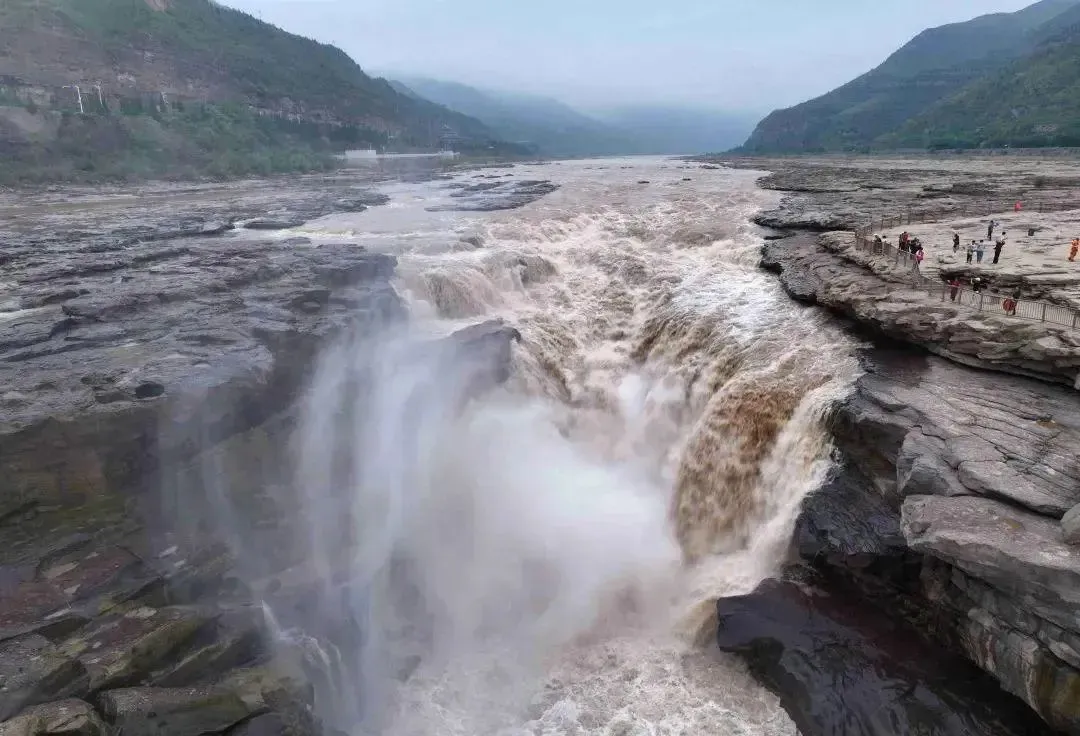
Yellow River Kettlekou Falls pictured in Yan'an, Shaanxi Province (Photo Credit: Xinhua)
The Yellow River appeared for the first time
The "yellow" of the Yellow River is actually mud. Ancient sources include: "the water of the Yellow River, mud in its seventh", and 90% of the mud comes from the Yellow Earth Plateau. Its turbidity, first appeared in Zhou Dynasty, closely related to Zhou people's agricultural development.
In the spring and autumn period, with the development of productivity, iron farming tools gradually dominated agricultural production, speeding up the development of the yellow earth plateau, impact on the natural ecological environment huge, so there is "Left Pass" in "Once the river clears, life geometry", meaning that human life is short, waiting for the Yellow River to clear is impossible.
During the two-han period, the Yellow River was very muddy and people called it "turbid river". The Han Shu·Geography of Dong Han Bangu describes the turbidity of the Yellow River for the first time.
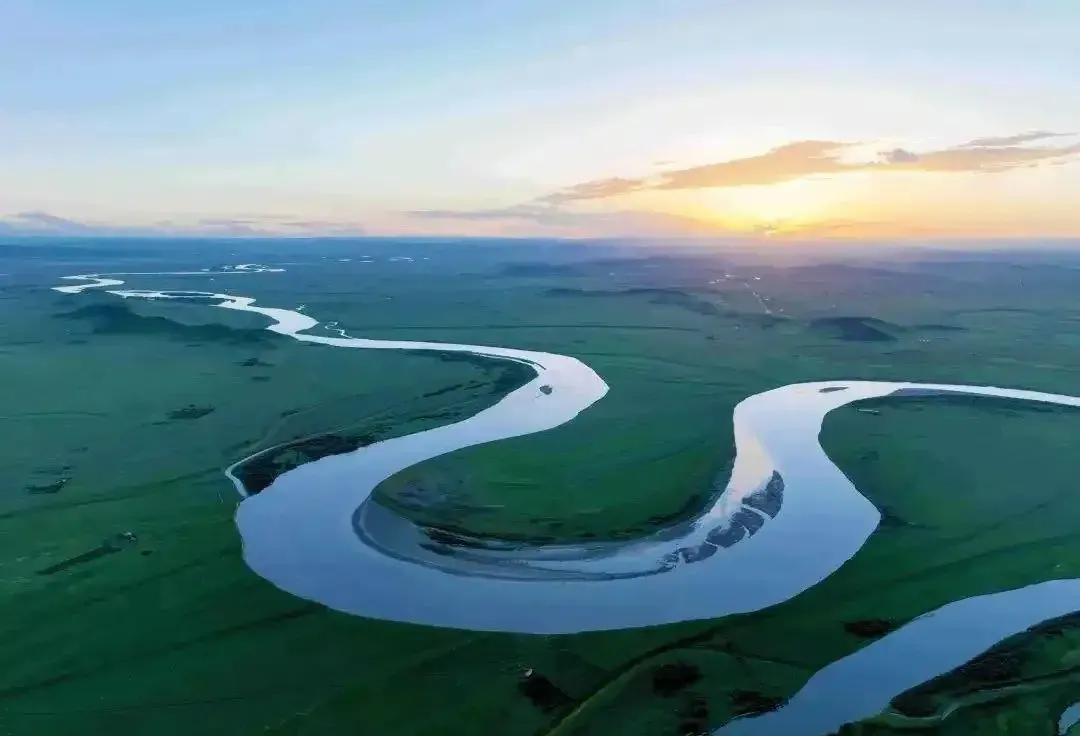
Yellow River photographed in Aba Tibetan Qiang Autonomous Prefecture, Sichuan Province (Photo Credit: Xinhua)
Since the Han Book, from Tang to Song, Jin, Yuan, Ming and Qing in the sixth century AD, the word “yellow river” appeared in a large number of works by poets of various dynasties. For example, “the yellow river flows into the sea.”
The earliest location of the Yellow River turning "yellow"
In the spring and autumn period, Qin Jin's east and west developed along the Yellow River to the north, the population also gradually increased and the range of activities was greater. After Qin Han, the river covers were included in the map and may have become muddy in the Yellow River between Longdong Plateau and Longxi Plateau.
According to Hanshu·Geography, "Changshan County · Yuan's County" appeared the earliest Yellow River. Changshan is Hengshan County, and Changshan County is Hengshan County. And this Hengshan is the former North Mountain of Quyang, Hebei Province (Old Hengshan is today Da Mao Mountain in Baoding City, Hebei Province).
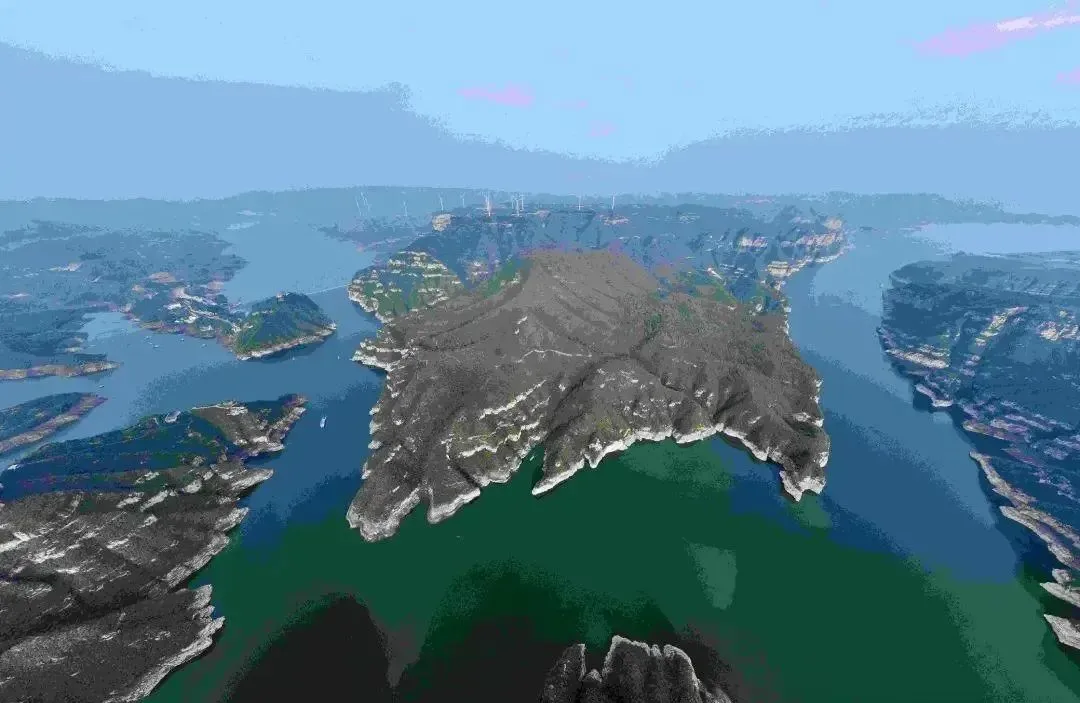
The Yellow River pictured in Jiyuan City, Henan Province (Photo Credit: Xinhua)
Yellow River Yellowing Factor
Natural Factors:
Water loss in the Yellow Earth Plateau and mud accumulation in the lower Yellow River occurred during prehistoric geologic periods.
The human factor:
The ancient city is located in the middle of the Yellow River basin, where the rulers built grand buildings to establish prestige and pursue scale over the past generations. Those who want to take former generations often pay a torch, then rebuild palaces and rebuild palaces, so that wood as the main building material of ancient times is costly, concentrated on the upper and middle sections of the river.
Agricultural development. With the rapid growth of population and difficult to meet the demand, people indiscriminately deforestation, the original development method of knife cultivation and fire burning caused extensive damage to the raw forest.
Forest fires. Natural or human-caused fires are a huge threat to forests. In ancient times, forest fires can only wait for nature to go out, and trees are burned in large numbers causing loss of soil and soil.
The Yellow River in History
The Yellow River has been cleared 43 times in history, with an average of over 40 years. It first occurred in the ninth year of Jianwu (33 A.D.), when "Plain River Water Clearing" (present-day Shandong Dezhou) was closely related to the Central Plains Dynasty political and economic center moved east from Guanzhong District to Luoyang Basin.
The Yellow River was "cleared" three times in a row during Song Huizong, a thousand ancient wonders. The reason is that the Central Plains dynasty, which had been founded by agriculture, lost control of the Northwest Territories during this period and restored ecology.
After the establishment of the new China, the party and state took the Yellow River governance as an important event to govern Xingbang. After generations of hard work, it has achieved great achievements.
Source: Cop China
Disclaimer: Some of the information material is sourced from the web, content views are only for communication use, do not do any commercial use, copyright belongs to the original author.