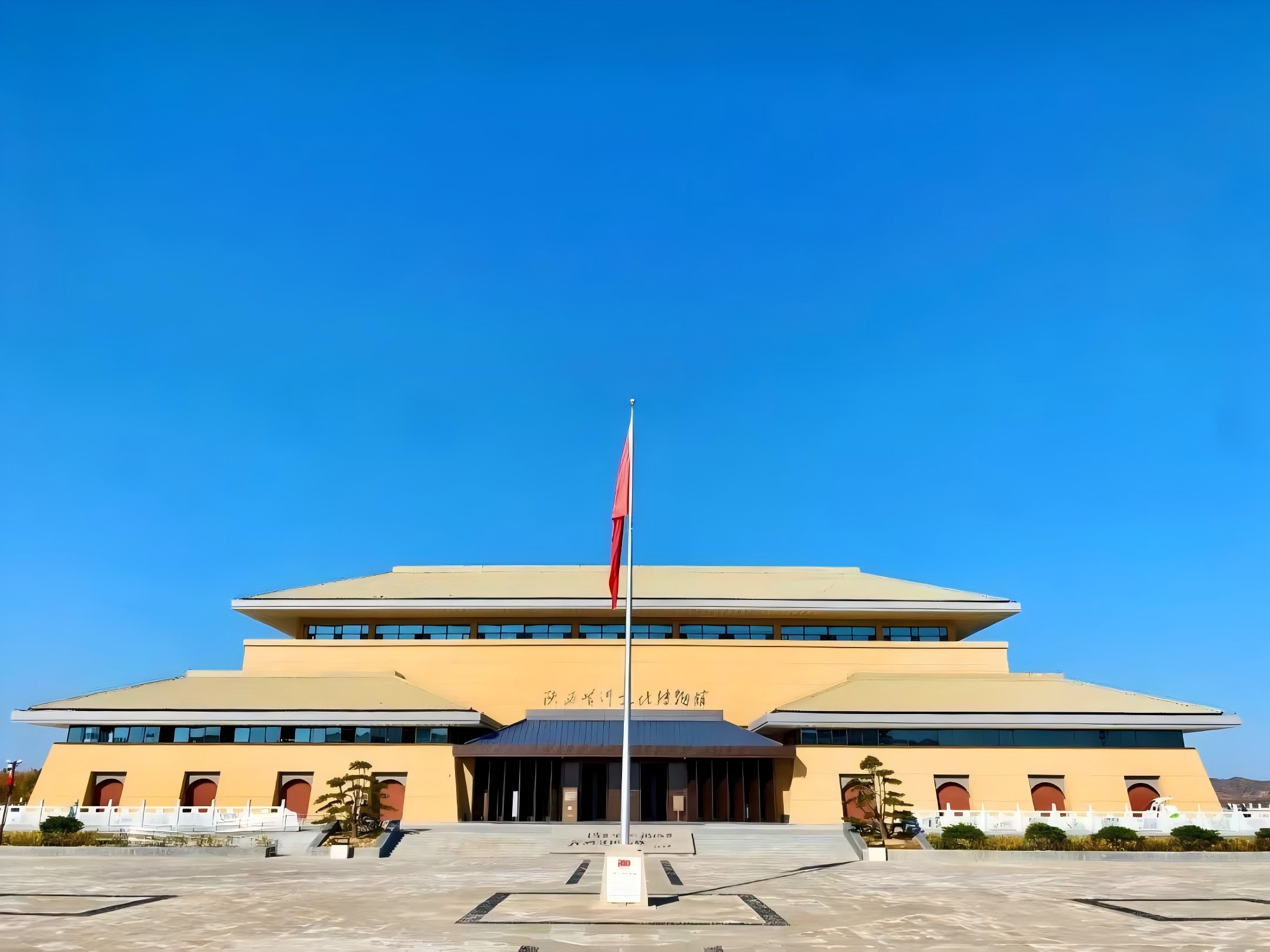
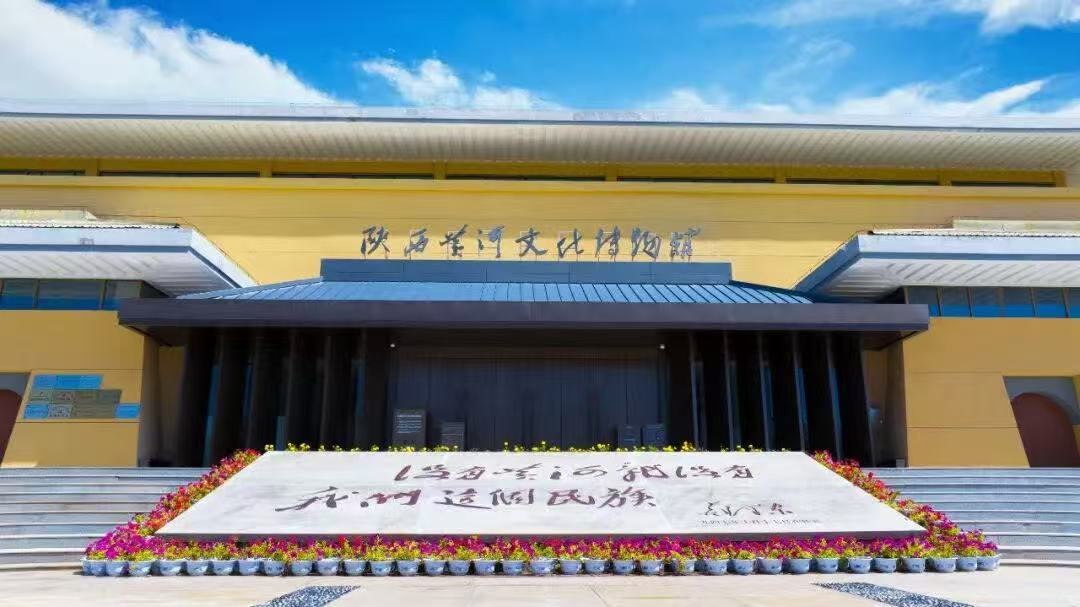
In 1947, Mao Zedong moved to Shaanxi North in Jiaxian County. In October 2023, the Yellow River Cultural Museum was opened in Jiaxian County with an area of 16,000 square meters and 12,000 exhibits. What kind of story would such a huge museum give us?
Tech lead
5464 mechanical modules to perform Jiuqu Yellow River
With the power of innovation and technology, Shaanxi Yellow River Culture Museum has created a stunning immersive experience: with 5,464 mechanical modules dynamically deduced Jiuqu Yellow River landscape dancing with light, holographic projection technology recreates the mysterious sheen of jade at stone ruins. VR technology brings the lost Jiaxian Saisai to life in the virtual world.
Song White Glaze "Yellow River Poems" Poetic Porcelain Pillow
When you step into the hall, the high-pitched “Yellow River Boatman Song” sings through the entire space, instantly ushering us into the magnificent landscape of “Yellow River Water Sky”. The museum named after the Yellow River, tells each visitor the story of the thousand years of the Mother River.
This modern high-tech display means that the audience can feel the shock and momentum of the Yellow River for years.
Yellow River Museum Director Xue Xiaohua added that the museum aims to "tell the story of the Yellow River, carry on the culture of the Yellow River and continue the bloodline" as its philosophy. Based on the thick Yellow River culture along the Yellow River, it uses living manifestations to deeply explore the roots, veins, sources and souls of the Yellow River.
The Yellow River is the mother river of the Chinese nation, and it is also a spiritual symbol of the Chinese nation. The Shaanxi section of the Yellow River is a unique existence. It passes through the watershed area of about 1333 thousand square kilometers in Shaanxi territory. From Walltou Village, Fugu County, Yulin City, Fugu County, Yulin City, into Shaanxi County, Tongguan County, Weinan City, two parts: Jinshaan Canyon Section and Fenwei Plain Section.
Vein Persistence
Travel resources along the Yellowknife
Shaanxi Yellow River Culture Museum's "Changhe Wan Ancient Flow - Basic Display of the Shaanxi Yellow River Culture Museum" exhibition, won the "National Museum Top Ten Exhibition Boutique Promotion" award at China's main venue on May 18th International Museum Day 2024.
White Glaze "Medium Porcelain"
The exhibition “Changhe Wan Ancient Flows – Basic Display of the Yellow River Cultural Museum in Shaanxi Province” is divided into four major parts of the “Dahe Tangtang Town View Foursquare”, “Civilization Dawn Shines on Jiuzhou” and “Yellow River Ninety-Nine Road Bay” and “Anlan Hai Yanqing” fully embodies the characteristics of “The Yellow River One Pavilion Collection”.
In the exhibition hall design, we fully use new ideas, new technologies and new means to highlight key scenes and exhibits through various auxiliary means such as holographic projection, scene restoration, art relief, immersion experience, etc.
80m "Yellow River Love" Cultural Volume
He also gave us a few examples of Yellow River culture:
The first is that the museum specially invited professors from Xi'an Academy of Fine Arts spent months meticulously drawing 80 meters "The Love of Nine Qu Yellow River" cultural long volume, which detailed the unique folk customs along the Huangji province district, and at the same time enhanced the interactive and ornamental picture through digital technology.
Second, as one of the most important archaeological discoveries in China in the 21st century, we have refreshed our understanding of the early civilizations of the Yellow River Basin.
In the exhibition hall, the museum uses a variety of high-tech means to fully demonstrate knowledge of geomorphology along Huang Jiu Province, so that complex information becomes easy to understand.
Four is that the museum has set up a variety of interactive experience installations, such as VR experience area, interactive games, etc., not only enhance the interestingness of the exhibition, but also attract more young visitors to learn Yellow River culture in entertainment.
Five is a collection of non-relic works including Fengxiang mud plastic, social fire horse spoon, cloth embroidery, paper cut, Tangka and other features of the Yellow River Basin.
Must See Exhibits
World's Most Complete Yellow River Elephant Fossil
Walking into the exhibition hall of the "Dahe Soup and Look Foursquare" unit, dozens of archaeozo skeletons towered over tens of meters high. Visitors are like sitting in "Jurassic Park."
Students visit paleontological fossils at Yellow River Cultural Museum, Shaanxi
The Yellow River is the bloodline of the earth and the origin of civilization. Through plate tectonic movements, China has formed the thousands of miles Yellow River. Its unique geographical environment and abundant natural resources have bred these ancient large creatures. Archaeologists have discovered a large number of paleozoan fossils, such as giant yellow river elephants, ferocious sabre-toothed tiger archaeozoan skulls, dinosaur eggs fossils, etc.
The Yellow River flows from west to east through the Huangtu Plateau and the Great Plains of Huanghuai Sea. It flows through Qinghai, Sichuan, Gansu, Ningxia, Inner Mongolia, Shaanxi, Shanxi, Henan and Shandong provinces and finally into the Bohai Sea.
As early as hundreds of thousands to tens of thousands of years ago, the sabertooth elephant lived in the warm area of tropical and subtropical swamps and riverside. It is a "Big Mac" after dinosaurs. We saw that the largest collection of sabertooth elephant fossils in the exhibition hall was more than nine meters long and four or five meters high.
According to Gao Yani, this yellow river elephant fossil is one of the most complete saber-toothed skeletons found in the world. This fossil not only makes ordinary tourists feel the magic of life evolution, but also becomes a must-visit for paleontology lovers after visiting the museum.
Big River Soup
Yellow River culture is the spiritual cornerstone of national renewal
The Yellow River flows through the Huangtu Plateau area of Shaanxi, and 90% of the rough sand that silts in the lower reaches of the Yellow River comes from Shaanxi. Although it is turbid here, it also clears here.
In the exhibition hall section of "Anlan Hai Yanqing" in Yellow River, the museum specializes in designing and using multiple multimedia oversized screens to display data such as hydrological water situation, ecological protection and other data in a three-dimensional dynamic way.
Mr. Xue said that Shaanxi has continued to promote ecological protection and high-quality development of the Yellow River Basin over the years, strengthening comprehensive desertification governance, and jointly promoting ecological projects such as "Three Norths" protective forest construction. The Green Map pushed more than 400 kilometers northward, realizing the transformation of the Yellow River Basin from "yellow" to "green", making a positive contribution to the renewed prosperity of the Yellow River culture.
Today, after years of afforestation, the Forestry Administration recommends local people to plant green plants that are especially suitable for desert environments, resulting in forest cover jumping from 0.9% to 36%. Currently, this 2.3 million mu of camphor pine forest has created a “Great Green Wall” for this vast unscrupulous land.
“The Yellow River Basin has been the political, economic and cultural center of the country for more than 3,000 years, while Shaanxi is the core area.”
No sound
Yellow River Culture
In 1947, Mao Zedong completed the drafting of the People's Liberation Army Declaration in Jiaxian County and visited the banks of the Yellow River.
The Yellow River Basin has a rich and diverse cultural heritage. From the Tibetan style of the upper Qingtian Plateau, to the Shaanxi Xintian Tour in the Middle Huangtu Plateau, to the drums of the lower Qilu Land downstream, the distinctive food, architecture, music, dance and other intangible cultural heritage are as diverse as tributaries of the Yellow River.
In the paper clipping zone, you can see representatives of the Yellow River Basin drumming art such as Weifeng gong drum in Shanxi, Anse waist drum in Shaanxi and Fushan cut paper in Shanxi, showing the people's love for life and awe for nature.
In addition, the exhibition hall also opened a theater and drama area. It will exhibit many kinds of plays along the Yellow River. With unique style and technique, these non-relic products from the Yellow River Valley show the wisdom and creativity of the people in the Yellow River Valley.