The Yellow River
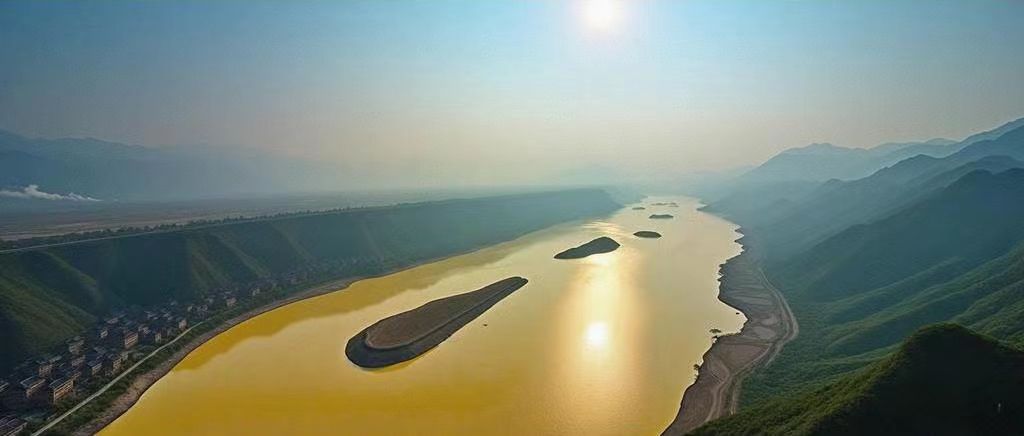
Photo taken by drone on November 24 at the Shaanxi Yellow River Culture Museum.
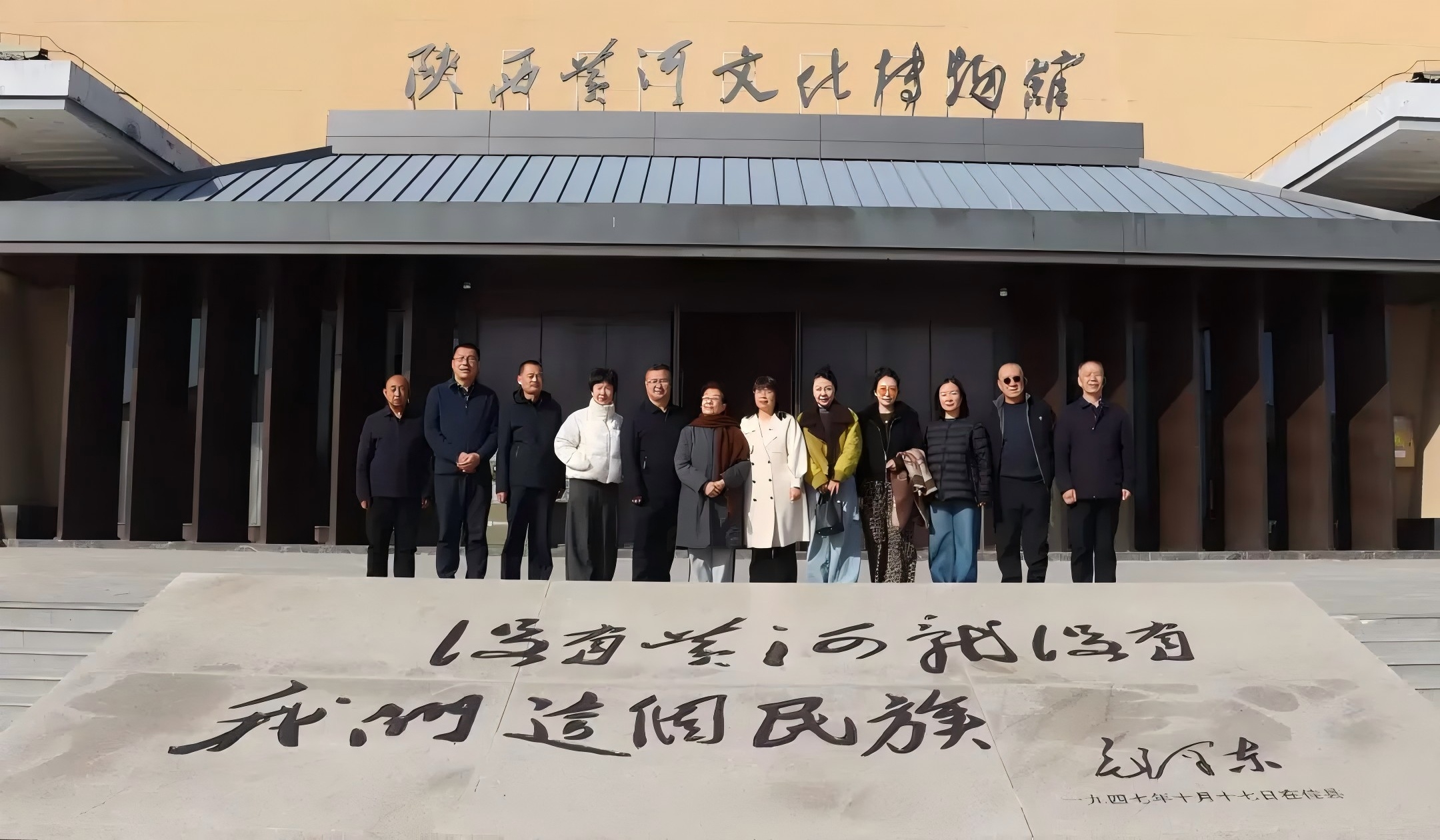
Without the Yellow River, there would be no nation.
From sheepskin rafts to powerboats, from the sand to the sea, the Yellow River has affected us and influenced us for thousands of years.
On October 27, Shaanxi Yellow River Culture Museum officially opened its doors in the Oriental Red Culture Industrial Park, Jiaxian County, Yulin City.
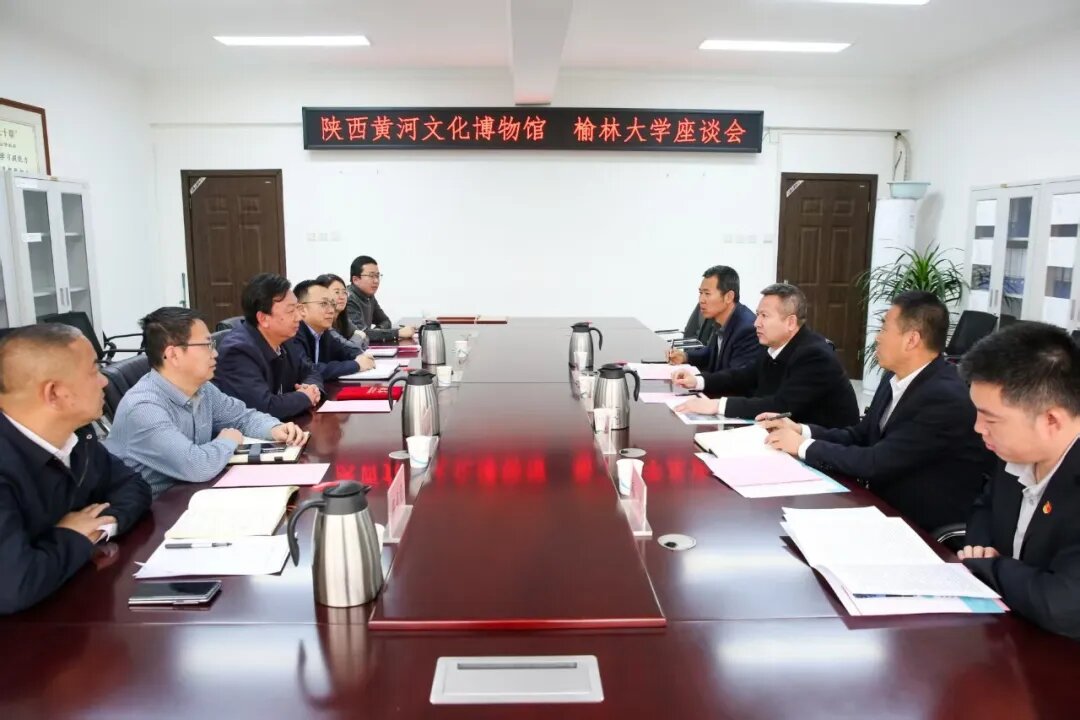
As an important result of our province’s promotion of ecological protection and high-quality development in the Yellow River Basin, Shaanxi Yellow River Culture Museum can help my province tell the story of the Yellow River.
Keep Yellow River Memory
“Do you know how many rivers there are?”
On November 24, as the song sounded, on the wall of the Yellow River Cultural Museum in Shaanxi, 5,464 colored squares corresponding to the total number of kilometers of the Yellow River flipped like a wave.
"This is the largest modern mechanical matrix art installation in the country. This overture was played, unveiling the big curtain of the four halls of the Museum of Yellow River Culture, Shaanxi Yellow River Culture Museum.
16,000 square meters, more than 10,000 exhibits, the Yellow River Basin material civilization, spiritual civilization and ecological civilization are presented in this museum.
What kind of a huge museum tells the story of the Yellow River?
“Foot down Jia County, highlight Shaanxi and look along Huang Jiu Province, we have involved the culture of the entire Yellow River Basin,” Liu Weihua, director of the Yellow River Cultural Museum, told reporters.
The Yellow River is a unique presence.
The Yellow River flows through the valley area of about 1333 thousand square kilometers, from Fugu County, Yulin City, into Shaanxi Province. It can be divided into two parts: Jinshaan Canyon section and Fenwei Plain section.
The Yellow River is dark here, but it’s also clear.
In the exhibition hall of "Dahe Town and View Foursquare", the multimedia screen leaps blue cursor, showing data such as hydrological water situation and ecological protection in the Yellow River Basin of Shaanxi; a projection sand tray simulates the historic transformation from "Shajin people retreat" to "green sand retreat" since 1978.
In order to turn the Wanli Wind Sand Line into a "Great Green Wall", Shaanxi has continued to promote ecological protection and high-quality development of the Yellow River Basin over the years, strengthening comprehensive desertification governance, and jointly promoting ecological projects such as the construction of the Three North Protective Forests.
In order to continue writing the "green" brush strokes into the future, in recent years, Shaanxi has issued documents such as "Hong Kong Cultural Protection Heritage Plan", "Ecological Conservation and High Quality Development Plan of Huang River Basin in Shaanxi Province".
“The length of the Yellow River in Jiaxian County accounts for 10% of the Shaanxi section of the Yellow River, and it is important that the museum landed here.” Liu Weihua said that since 2021, with the joint efforts of various departments at all levels, the museum has mobilized artifacts throughout the province.
A special corner of the museum embodies the meaning of this museum in the exhibition hall “Ninety-nine Roads of the Yellow River”.
“The game was lost after 1960. Today, we use projection technology to recreate the game in the museum and revive the old lost play.” Zhang Nannan said, “One of the important roles of the museum is to call people to retain the memory of the Yellow River and carry on the culture of the Yellow River.”
“The opening of the museum reminds me of Jialing Yellow River Bridge,” said Cao Pihong, a retired cadre in Yulin City who came to visit on the afternoon of November 24.
“From crossing the river by boat to driving over the bridge, Jialing Yellow River Bridge has brought great changes for Jiaxian County.” Cao Pihong added, “Shaanxi Yellow River Culture Museum can attract tourists from all over the country.
Tell the Yellow River Story
On November 24, students of the nine-year school in Tongzhen, Jiaxian, visited the Shaanxi Yellow River Culture Museum.
For Zhang Nannan, who grew up playing on the Yellow River beach, the Yellow River meant a different kind of nostalgia.
“The Yellow River Basin has been the political, economic and cultural center of the country for more than 3,000 years, while Shaanxi is the core region,” Zhang Nannan introduced.
Bronze Fangzun, Tang Sancolor and white glazed porcelain... In the exhibition hall "Civilization Dawn Yao Jiuzhou", a piece of artefacts from Baoji Bronze Museum, Shaanxi History Museum and other places tells the long story of Zhou Qin Hantang.
“Look! Through digital images combined with miniature scene recovery display, we can clearly see the magnificent buildings made up of Imperial City Tai, Inner City and Outer City triple city walls in Shi Ruins. These murals, jade and stone carvings reflect the high civilization of Stone Supply Culture.”
It is one of the most important archaeological discoveries in China in the 21st century, and the largest urban site ever discovered in prehistoric times. The main remains are around 4000 years old.
“The museum was an eye-opener for me. To better introduce visitors to the Yellow River, I had to keep learning and turn the expository from ‘thick’ to ‘thin’ and then ‘thin’ to ‘thick’,” says Nannan Zhang.
For expositor Qujani, the exhibits in the museum made her a treasure of public art graduate.
Intangible cultural heritage projects in the Yellow River Basin are diverse, and the museum has brought these treasures into their pockets.
Standing in front of a 70-meter-long "Nine Qu Yellow River Love" yellow river culture volume, Qujani's eyes shone brightly.
This is a large painting by a professor at Xi'an Academy of Fine Arts for months, showing elements such as folklore that are unique along the Huang Jiu Province.
“This art form can better display the different cultural characteristics of the entire Yellow River Basin, broaden visitors’ horizons and enrich the aesthetic experience,” Qujani said.
In addition, Fengxiang mud plastic and social fire horse spoon make visitors feel the exquisite art of ancient law, cloth embroidery, paper cut Tangka and other fine works are immaculate.
In the exhibition hall, a large information visualization hydrographic dish displays knowledge of landscapes along Huang Jiu Province. Children who came to study muttered and read.
Jiaxian Tongzhen ninth-year school sixth grader Zhang Xinyue's notebook remembers the dense and hemp, "Town river god beast" "100 fold Yellow River spirit"... a key word recorded her visit harvest.
Jia Ruixuan, a member of the twenty-fifth graduate branch of Shaanxi Normal University, told reporters that although these children grew up on the side of the Yellow River from an early age, they still had the first opportunity to understand the Yellow River so comprehensively and systematically.
“A series of innovative displays such as VR experiences and interactive games at the museum bring a strong visual impact. Kids feel new and interested in Yellow River culture,” says Mr. Jia.
“We have set up many interactive experiences to highlight immersion and enrich the Chen form,” said Liu Weihua. “This is a combination of tradition and modernity.
Guarding the River of Happiness
Yellow River Siffu sculpture in the exhibition hall of the Yellow River Cultural Museum, Shaanxi.
Yellow River, the sky is flat.
In the exhibition hall of "Yanghe Anlan Hai Yanqing", the Ming Dynasty town water stone sculpture, named "Yanghe God Beast", stands still. Behind it is the historical record of the Chinese treatment of yellow - from Dayu to the famous "Three Strategies for River Treatment" by Jiajean during the West Han period, to Li Huiyi, a Shaanxi water expert during the Republic of China, proposed "Integrated Water Treatment".
"The People's Republic of China has been established for more than 70 years, successive Shaanxi provincial governments attach great importance to and actively promote the development work of water conservancy reform and development.
In recent years, Shanshui Lintian Lake grass sand system governance, vigorously promote small watershed governance and silt dam construction.
"This is the interactive projection display of the Yellow River Tourist Boutique Route, which shows the Yellow River Central City Brand Tour Circle. You can see if there are any tourist routes you like." Qujani introduced visitors to the Yellow River Valley Ecological Protection and High-Quality Development Plan.
On the projection display screen, Shaanxi along the Yellow Highway attracted a lot of visitors. "This road runs from Yulinfu Valley in the north and Weinan Huashan in the south, connecting more than 50 tourist attractions along the route and more than 30 specialty agricultural industrial parks."
The story of the Yellow River cannot be said. Today, the construction of the Shaanxi Yellow River Culture Museum continues. Liu Weihua introduced that the museum is actively applying to be included in the provincial patriotic education base and research base.
“As the museum continues to improve its content and equipment, I believe that more and more people will visit the museum and learn. We will continue to innovate ways of exhibiting and promote the use of artifacts,” said Liu Weihua.
As of early November, the Shaanxi Yellow River Culture Museum has brought about 20,000 visitors to Jiaxian County. In the future, the museum will bring more possibilities for developing global tourism in Jiaxian and even Shaanxi North.
"The Yellow River Cultural Museum of Shaanxi is not only a museum for the people of Shaanxi, but also a museum for the people of the whole country.
The Yellow River descends into the East China Sea, and the story of the Yellow River continues to be updated and its culture is evolving. This ancient and young museum will tell more stories about the Yellow River.