

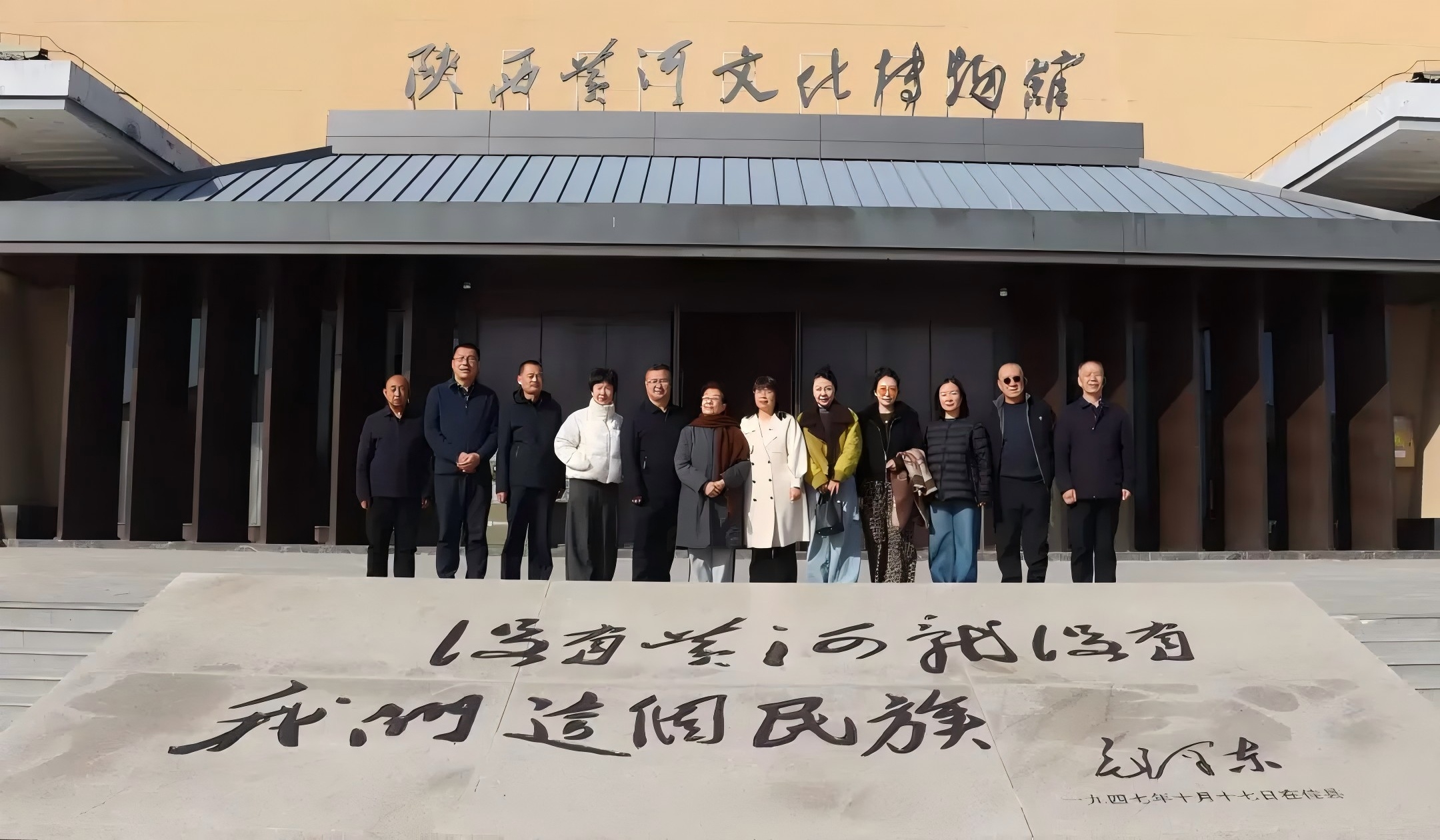
The Yellow River is surrounded by the genes of Huaxia civilization. On the Huangtou Plateau, the Shaanxi Yellow River Culture Museum is like a spiritual beacon, illuminating the shipping lanes of national memory. In this temple of millennial civilization, there are a special group of "wanderers" who hold knowledge boat paddles to build bridges between history and reality with sound, so that every visitor can touch the pulse of Yellow River culture.
The Pilgrimage of Knowledge: Searching for Civilization Codes
The exhibition system at the Yellow River Museum of Shaanxi is a comprehensive encyclopedia of Yellow River culture. From the mysterious totems on the Tao of Yang Shao, to the dappled inscriptions on the bronzes of Shang Zhou, from the cilifu sign at the ancient ferry crossing of the Yellow River to the crystallization of contemporary yellow river engineering.
Zhang Nannan, the curator of the museum, put a lot of effort behind his efforts in order to be able to give visitors wonderful explanations. More than 3,000 exhibits, each piece of historical background and cultural connotations need to be familiar with his heart.
In order to understand the historical changes of the Yellow River Basin, they study a large number of historical books; in order to learn about folk customs along Huang Jiu Province, they consult information and visit people.
The Hardening Journey of Art: Making History Come Alive in Sound
Lectures are not just the communication of knowledge, but also an art. In order to make visitors feel the charm of Yellow River culture, they continue to practice their skills.
From pronunciation, tone, body language and eye contact, every detail is crucial. Pronunciation should be standard, language must be standardized, this is the most basic requirement. In terms of organization and expression, they strive to be clear, accurate, concise and complete.
In the course of the lecture, the lecturers will also speak according to the characteristics of different audiences. They will use more lively and interesting language, interspersed with little stories to stimulate children’s interest; in the case of professional scholars, they will integrate more academic research and expertise into the lecture.
In the exhibition hall of Shaanxi Yellow River Culture Museum, Li Yumeng’s original “Situation Interpreting Method” is a fascinating one. She immediately became the narrator of the story of the Yellow River when she explained Jiaxian folk song “The Yellow River Boatman”.
The Power of Fire: Red Scarf Explainer's Growing Psalm
A group of people wearing yellow vests and red scarves are particularly striking among the flow of museums. These small narrators, with an average age of just over a decade, speak to the thickest civilization in their young voices.
During the holidays, these small lecturers are officially "on duty". The museum's specialized instructors will take them to learn about the history of the Yellow River Basin, and also impart teaching techniques, etiquette norms, and emergency handling skills.
Many parents study with their children, and some schools also use the museum as a second classroom. The red scarf interpreters are like cultural seeds sown on the land of San Qin.
The Red Scarf Explainer
Unending Perseverance: Writing Culture in Ordinary
They never complain because they know that their hands are not only knowledge, but also culture fire.
This kind of story plays out every day in the museum. Whether it’s winter or summer, or holidays, the lecturers stay on their job and interpret the role of cultural workers with professionalism and enthusiasm. They may not have earth-shattering feats, but it is this ordinary persistence that has brought the Yellow River to life in a new era.
The Yellow River is thriving, and civilization endures forever. At the Shaanxi Yellow River Culture Museum, lecturers build bridges of culture with their voices and hold a beacon to light up civilization. They are interpreters of history, communicators of culture and guardians of civilization.