Background of Project
The site is one of the core elements of ancient civilizations and early state formation. During the 20th century, Neolithic sites were discovered throughout the country, but it was never found in Shaanxi region, which serves as the birthplace and core area of Yangshao culture.
From 2000 to 2010, the National Bureau of Antiquities launched a special "Environmental, Livelihood and Cultural Studies during the Pre-Qin Two Han Period in Hechu District. Shaanxi Provincial Academy of Archeology jointly with Yulin City Antiquities Archaeological Exploration Task Force and Yulin City Antiquities Conservation Research Institute found more than 30 Late Neolithic stone cities in Dali River Basin and Yulin counties.
After 2012, with the excavation of stone sites and the academic community's high regard for prehistoric stone cities in Shaanxi, the archaeological survey of prehistoric stone cities has been gradually put on the agenda. In 2019, Yulin Antiquities Archeological Exploration Task Force applied to Yulin City Government for special funding.
Methods of work
In addition, the bedrock beneath the yellow earth in the upstream area of each river is rarely exposed and lacks stone to form the stone city. Based on the above understanding, we excluded the upper reaches of the river from the survey work, which focuses mainly on the downstream of all levels of rivers.
The first step is to discover Shicheng as soon as possible, "not entanglement". From 2019 to 2023, the teams follow the existing water system distribution map, to find the prehistoric stone city as quickly as possible, and complete specimen collection and basic information records, forming a "general map of Yulin's prehistoric stone city."
Investigate the harvest
Stone City Quantity and Tiers:
At present, about 20 prehistoric stone cities are found in neighboring south-central Inner Mongolia and northwest of Jinn, 3 are found in Yan'an, Shaanxi Yan'an and 1 are found in Zhangjiakou.
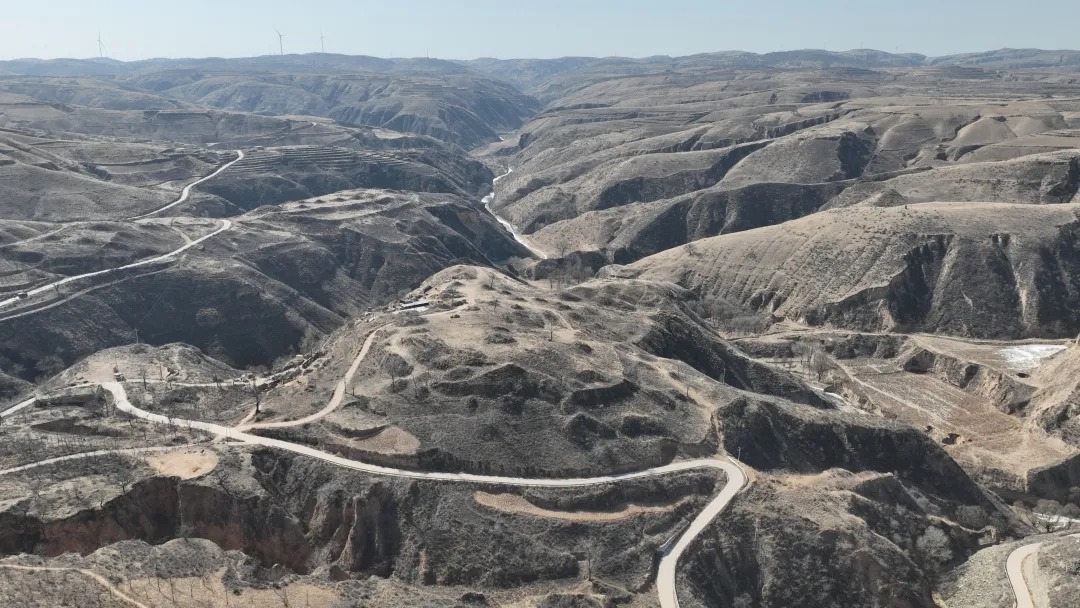
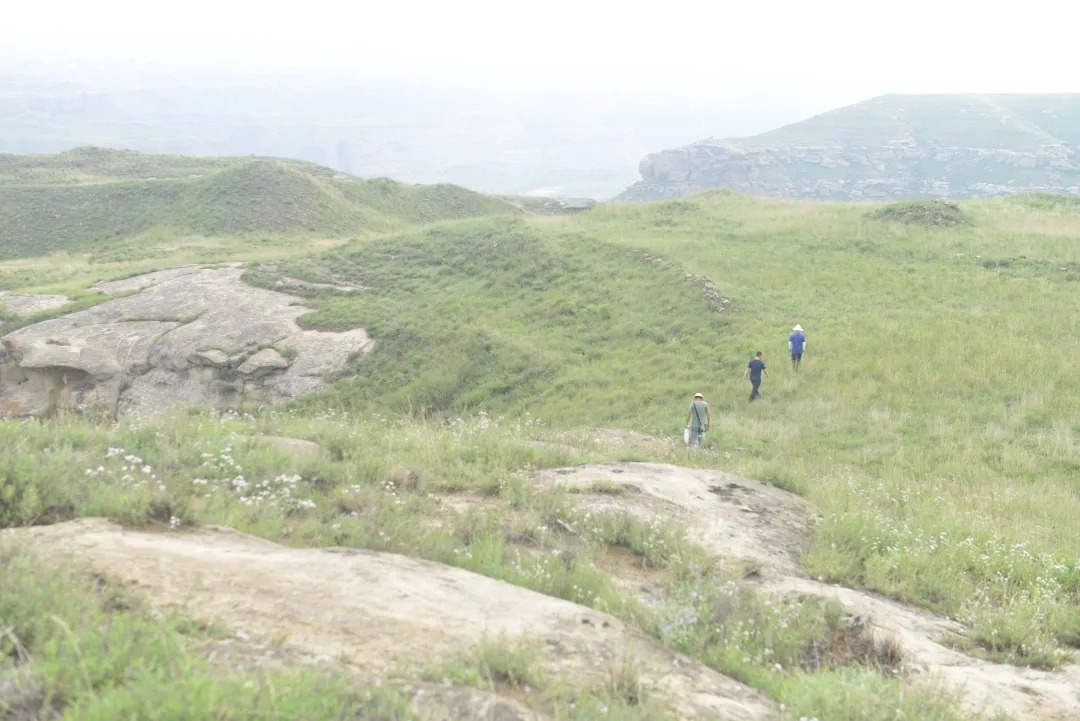
In the four provinces of Shaanxi, Jin, Meng and Ji, Yulin is the core area of China's prehistoric stone city distribution, and among the various stages of Shicheng communities, the largest size and highest specification stone cities are also located in Yulin. The prehistoric stone city of Yulin can be divided into 5 levels according to the area.
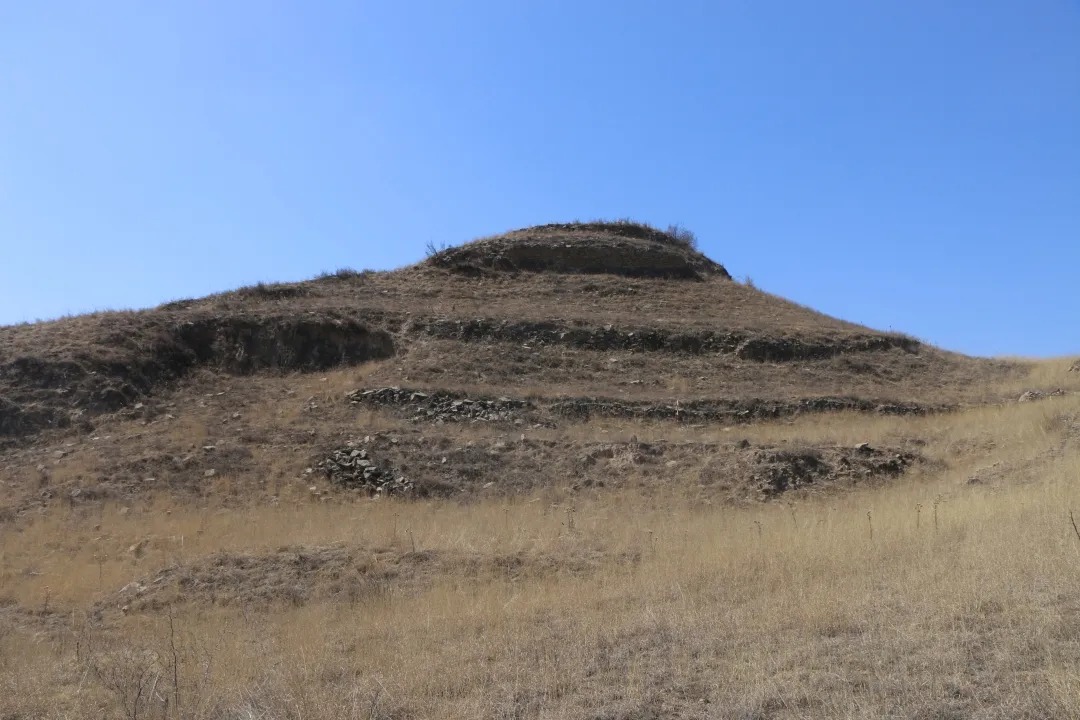
Elm City 1 Top Stone Stack
Top of Shenmue Castle
City of County 18
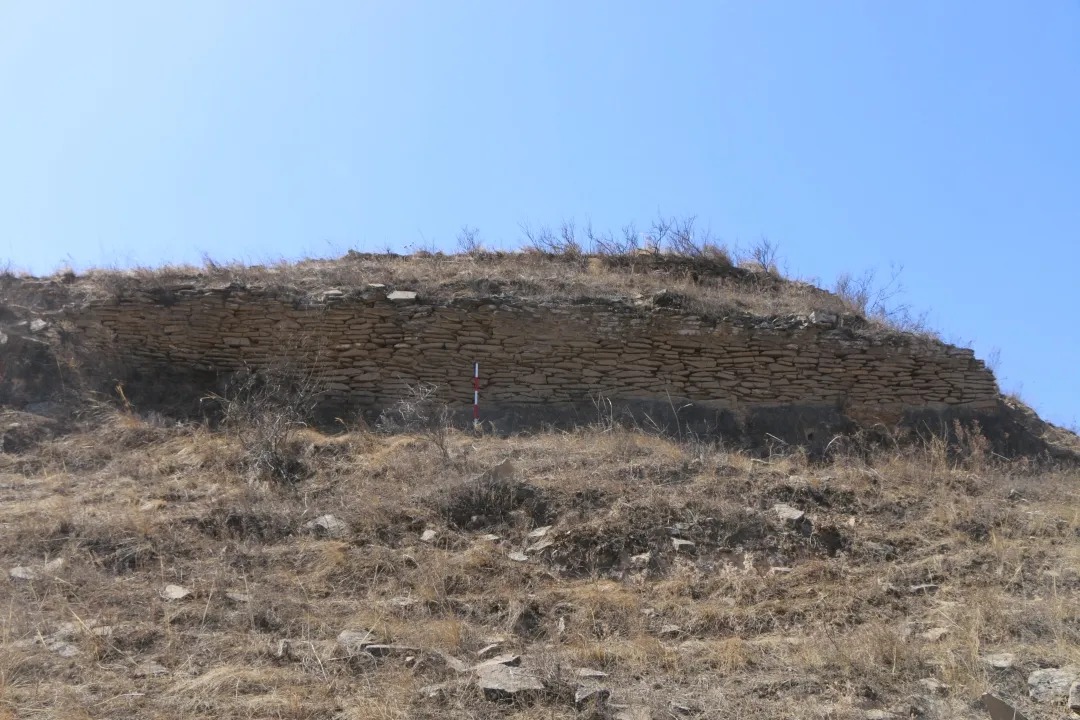
City of Jia County 18
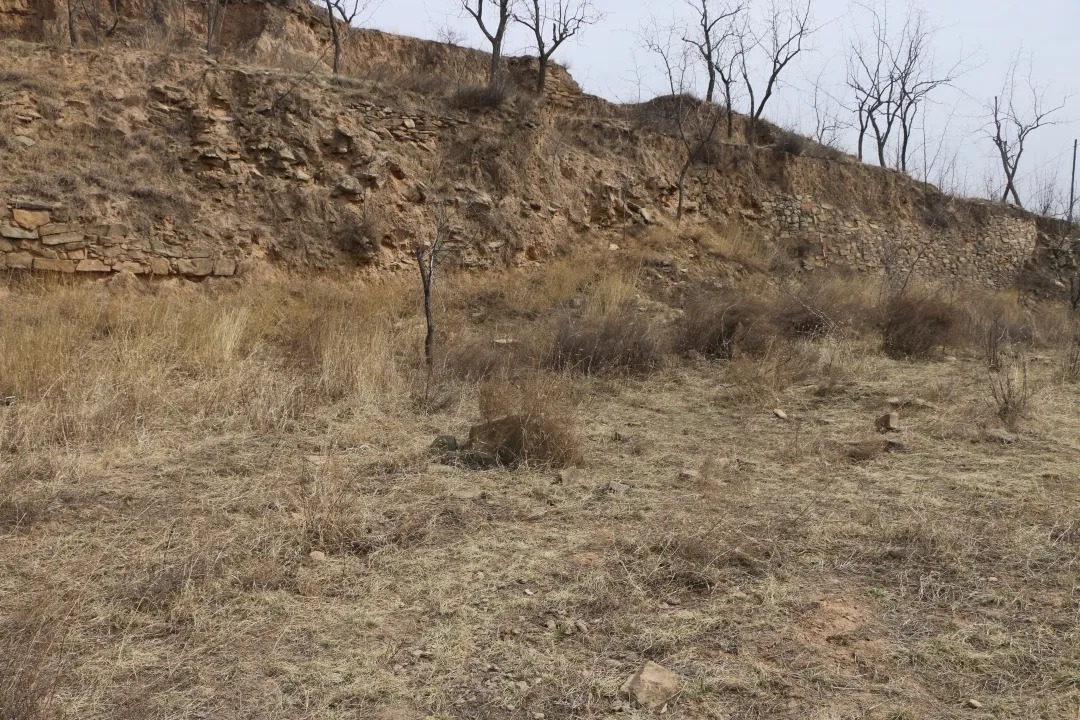
Wall of City 17
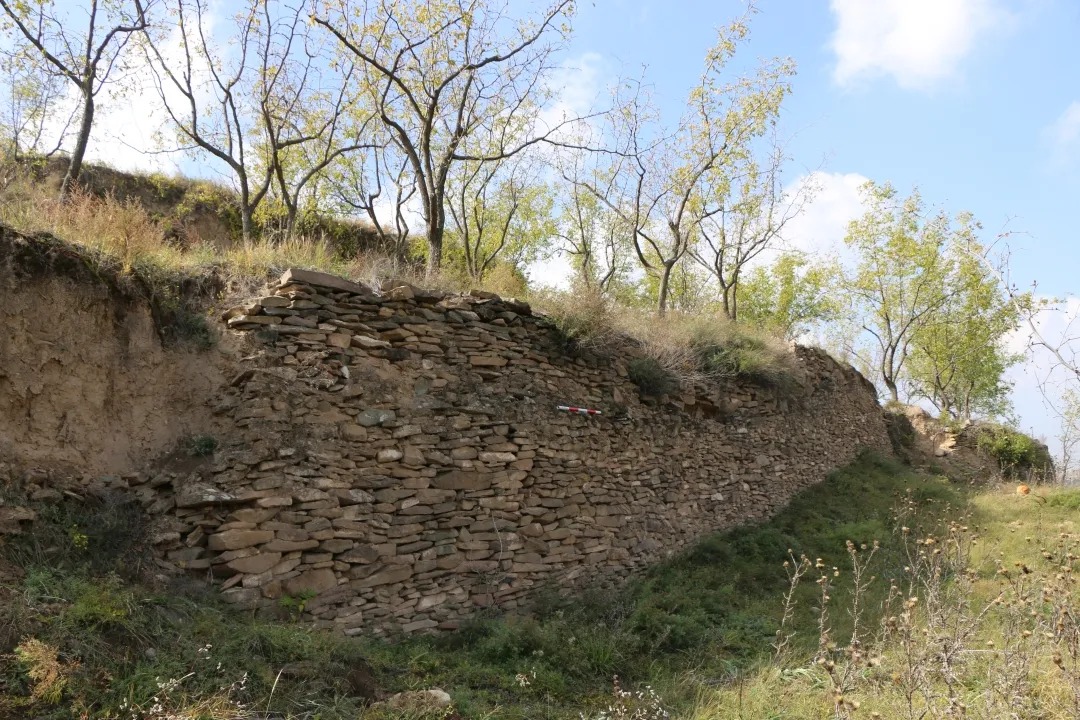
City of Jia County 1 Wall
Age and Cultural Property:
The era of Shicheng settlement in Yulin region began in the late Yangshao, finally on the occasion of the business week, that is, 2800 ~ 1000 BC, continued about 1800 years, can be divided into four large stages, currently tentatively confirmed the cultural attributes of each period.
(1) Late Yangshao: The construction of the prehistoric stone city in Yulin can be as early as the late Yangshao period. Dating data is about 2800~2700 BC, cultural connotations and the type of Yangshao culture spring protection phase II are similar.
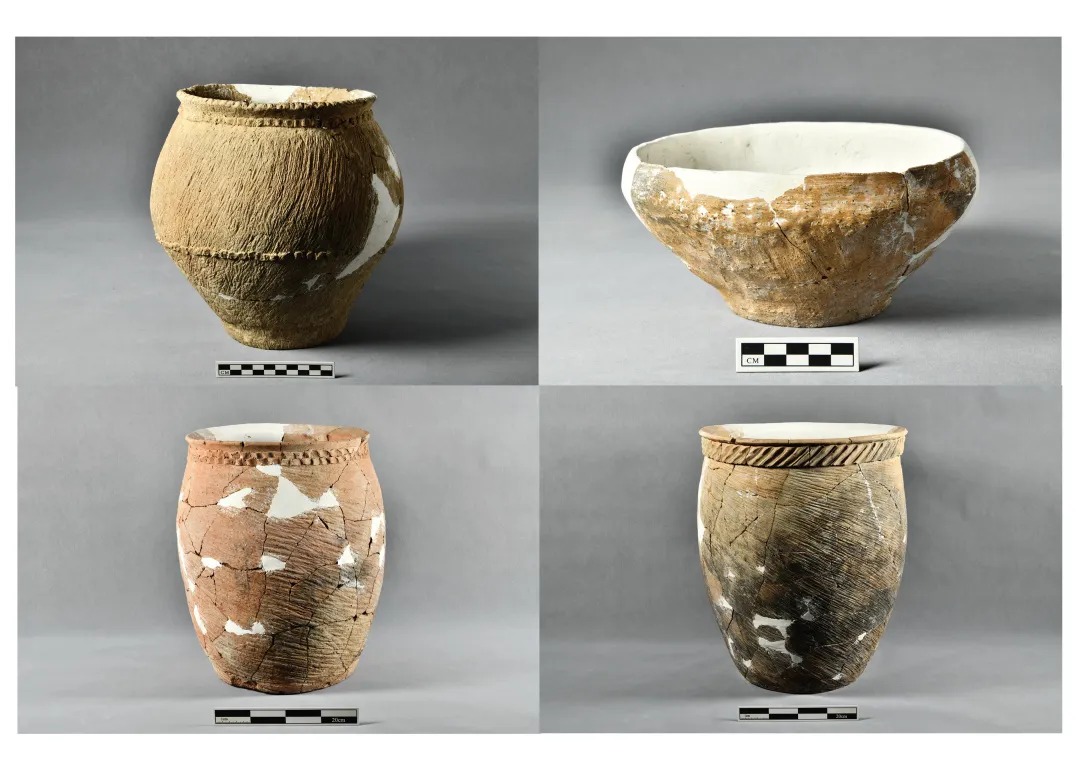
Late pottery in Yang Shao
(2) Early Longshan: dating data is about 2700 ~ 2300 BC, represented by the sites of Jiaxian Qiaojiazhai, Hengshan Jinzhai, Wak Kiln Canal and other sites. In the early stages of the Longshan era, marked with significance are several pieces of the earliest form of pottery crotch found at the site of Qiaojiazhai. In addition, the pointy bottom bottle in Shaanxi and Helaid areas were used throughout the early Longshan period, which lasted about 500 years longer than the pointy bottom bottle in Shaanxi Jinyu District. There was a certain cultural division with Shaanxi Jinyu District.
(3) Late Longshan: dating data is about 2300 ~ 1800 BC, the lower limit can be around 1750 BC. The second half of its journey has entered the Xia Dynasty stage, cultural attributes are divided into stone culture, apricot flower four phase culture and tiger mountain culture.

Longshan Era Pottery
(4) In the late second century, many prehistoric stone cities were occupied by Zhukaigou culture and Lijiazui culture respectively, even in the early Western Zhou period.
Spatial and temporal changes:
The prehistoric stone city of Yulin is distributed along both sides of the river, often multiple urban sites clustered in one group, and there are a large number of ordinary settlements with no stone walls distributed around it, showing obvious grouping relationships.
There has been a shift in the distribution space of Shicheng. From late Yangshao to early Longshan, the main distribution area of Shicheng is located in the south of Yulin, while Shenmu in northern Yulin and early Fugu Valley are relatively rare. By the end of Longshan, most of the early stone cities in southern Yulin were abandoned or dramatically declined.
Shape differences in Stone City:
There are various spatial layout types such as single-city circle, "parallel" multi-city circle, "tandem" multi-city circle and "cascade" multi-city circle. Outside the wall circle there are also residential areas and cemeteries.
Stone City Source Stream
We believe that these prehistoric stone cities were fused under the strong influence of western culture in Yanliao.
From the beginning of the early days of the Yangshao era, the area where Shaanxi Jinmeng meets has been occupied by the Yangshao culture, i.e. historical and historical types and immigrants of Dongzhuang type. From the bottom ditch of the Yangsao Cultural Temple to the pre-posterior section of the Yangshao Culture, this is the northern frontier of Yangshao Culture. Based on this understanding, we believe that the prehistoric stone city site in Helai area is a new cultural phenomenon arising under the influence of Red Mountain culture.
From a macro-temporal perspective, the early cultural interaction between Huangtu Plateau and Yanliao Region, where Yulin and Helai Region are located, can be divided into three major cycles, with the emergence and spread of Shicheng appearing in the second and third cycles.
In the first cycle, Yangshao culture historian period to the bottom of the temple period, Yangshao culture spilled out on all sides, causing cultural mutations in several surrounding districts.
The second cycle is from the late Yangshao to the early Longshan period, with the decline of Yangshao culture disintegrating, surrounding cultures have risen and influenced the original area of Yangshao culture. The core elements of Red Mountain culture should be in this macro context, deep influence through Zhangjiakou region on northern Huangtue plateau through Zhangjiakou region. Unlike Hongshan culture, the cultural undertones of Shicheng distribution with Yulin is still a native culture. Stone structures are stone settlements rather than pure religious facilities such as temples and graves.
During the third cycle, about 4100 to 3800 years ago, Huangtu Plateau was represented by the stone culture of pottery wuxi, wuxi and rope sandwiched sand cans were expanded eastward to northwest Jihe and Yanliao regions, leading to the emergence of Zhangjiakou Dungrogou Liangshi and typical stone culture Taolui.
Academic significance
The survey found 573 sites of prehistoric to Shangdai Shicheng, providing a complete understanding of the origin, development, dissemination and evolution of prehistoric urban sites in northern China. With Yulin as the center of gravity, Hechu District was at the edge or subsidiary of Yangshao culture in the early and mid-year period, cultural and social processes have long lagged behind cultural centers. In addition, this survey will provide important information support for the provision of "declaration" of stone sites and conservation utilization of prehistoric stone cities.
Article Source: China Heritage Newspaper