
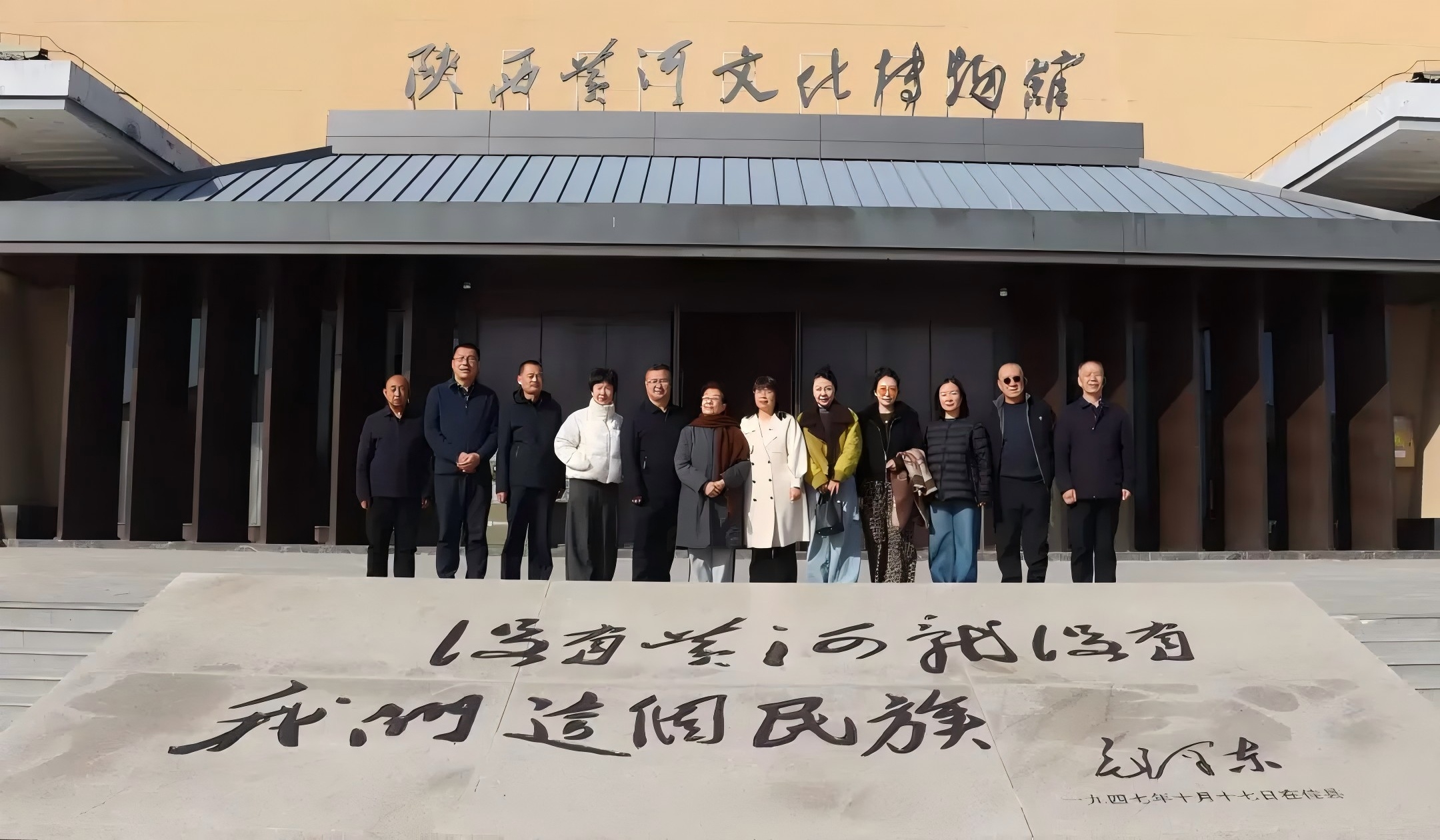
On February 13, 2026, the Shaanxi Yellow River Culture Museum invited Dr Chang Jingyu, an archaeologist and associate professor at Yulin University, to present “Exploring the Dawn of Yellow River Civilization through Prehistoric Painted Pottery.” Starting with colors that span thousands of years, the lecture explored the early development of Chinese civilization and the cultural influence of the Yellow River basin.
Following the development of painted pottery, Dr Chang began with the emergence of pottery in China some 20,000 years ago, an extraordinary step in mastering the chemical and physical properties of clay. He examined the striking “Shangshan red” of Zhejiang’s Shangshan culture, dating back 9,000 years, and the knowledge embodied in carbon-tempered pottery and ceramic slips. He then traced painted pottery in the Yellow River basin: rim bands of the Laoguantai culture 8,000 years ago; the lively human-face and fish designs painted inside Banpo vessels of the Yangshao culture; the expansive flower-petal and bird motifs on the exteriors of Miaodigou pottery; and the intricate spiral compositions of the Majiayao culture. The account concluded with the decline of painted pottery and the rise of gray pottery during the Longshan period.
This was a history of early Chinese society as well as a journey through ceramic art. Early painted pottery was broadly accessible, sharing artistic and religious expression across society. During the Longshan period, such expression increasingly came under the control of a small group. The decline of painted pottery reflected a transition toward ritual systems and new political authority, as early forms of the state began to emerge. Miaodigou painted pottery reached the sea in the east, Gansu and Qinghai in the west, the Yangtze River in the south and beyond the Yin Mountains in the north, with influences extending to Mongolia and Russia. This was more than the movement of objects: it reflected shared cultural ideas across regions and the emergence of an early cultural sphere of China.
Johan Gunnar Andersson’s excavations at Yangshao Village and the discovery of painted pottery helped open the field of Chinese archaeology. Subsequent generations of archaeologists used detailed evidence to challenge the theory that Chinese culture originated in the West and establish the local origins of painted pottery. From the uncertainty about cultural identity during the New Culture Movement to archaeology’s search for the roots of Chinese civilization, these vessels record both ancient aesthetics and technical knowledge. They offer evidence of the independent origins and diverse development of Chinese civilization, while also tracing the growth of Chinese archaeology and modern national consciousness.
As Dr Chang explained, the story is not only about the emergence, flourishing and transformation of a type of artifact; it also follows the growth of early Chinese civilization’s intellectual and spiritual life. Painted pottery from the Yellow River basin has become a powerful witness to the early influence of Chinese civilization. It takes our understanding of Yellow River culture beyond familiar folk songs and customs to the evidence of archaeology. These vessels illuminate both the inner world of prehistoric communities and the path by which we explore the origins of our civilization today.